


Prefer the print book? Buy on Amazon
As an Amazon Associate, Sumizeit earns from qualifying purchases.
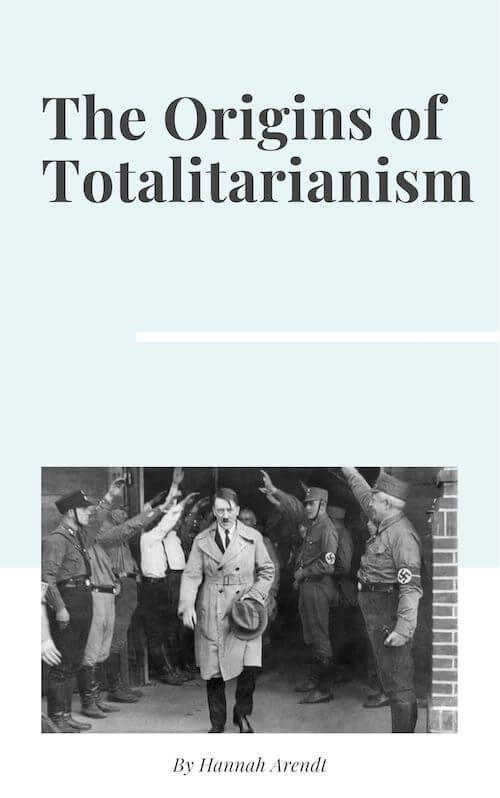
The Origins of Totalitarianism Book Summary
This The Origins of Totalitarianism Book Summary covers the key ideas, lessons, and takeaways in about 20 minutes.
Short Description:
Prevent totalitarianism by ensuring equal representation and free thought.
The best way to prevent the rise of totalitarianism from happening is for all of society to be represented equally and to encourage free thinking. The protection of human rights and free will is essential to continue living in a democratic society.
Preview the The Origins of Totalitarianism book summary
Below is a preview of Sumizeit’s comprehensive human-written summary of The Origins of Totalitarianism by Hannah Arendt. The full summary is 15-20 minutes long and covers the book’s key ideas in text, audio, visual, and video formats. Unlock the full 20 Minute Summary
The rise of totalitarian regimes in the 20th Century culminated in a conflict that would become known as World War Two. The emergence of totalitarianism in Germany and the Soviet Union threatened world peace and forever changed the nature of war.
But totalitarianism was not a novel concept at that point. And even after the defeat of Nazi Germany, the threat of totalitarianism was not gone forever. At different points in history, circumstances can give rise to this ideology in small or large movements.
To understand how totalitarianism becomes a mainstream ideology, you need to first look at its origins and the catalyst for its emergence. It is important to be aware of these facts so that you can be aware of how society can prevent history from repeating itself.
Totalitarianism and antisemitism are not new ideas.
The rise of totalitarianism in the 20th Century was not something that occurred overnight. The foundations for it lay in Europe’s past, going as far back as the 17th Century. Its ties to anti-Semitic behavior go back just as far.
The social and class divide in Europe is centuries old. As European society evolved from feudal states to monarchies, the Jewish community played an integral role. Throughout history, Jewish people have been employed as financial managers to the ruling classes.
Because of their status, Jews became economically stable. However, their wealth did nothing to help include them in European society and for centuries the Jewish community found itself resented by nationalist Europeans.
If you were a witness to the changes in Europe over the centuries, you would see the growing discontent with the Jewish population. Unfounded accusations and conspiracy theories about the Jewish grab for power spread throughout Europe. Despite their contributions to society Jews were seen as outsiders and looked down upon by almost all classes of Europeans.
This all sounds ominous enough, but it got worse. As nationalist movements grew in parts of Europe, they promoted the idea that their people were racially superior. By the time the Nazi Party rose to power in Germany, the antisemitism sentiment was at the core of nationalistic ideas.
Democracy only works when you represent everyone.
You are probably wondering how nationalist movements gain a foothold in government. After all, just because they promote racist ideas, you would think that most people as decent law-abiding citizens, would not buy into it. The reality is that the nationalist movement had a lot of help from existing state governments, even if it was unintentional.
Before World War Two, European governments were losing supporters and discontent was growing with their leadership. Simultaneously, resentment towards Jewish people grew. One of the reasons for the resentment was the fact that a majority of Jewish people remained wealthy. Other communities were impacted by fluctuations in economic stability in European nations and they blamed the Jewish people for their bad situations.
As the years went by, many of the poor communities felt ignored by the politicians, who focused their energies on the…
Want the complete 20-minute summary?
- Full structured summary
- Video Summary
- Podcast Summary
- Audio summary
- Key takeaways
- Exercises
- Quiz
- Highlights and notes
- Ask the book with AI
Who should read The Origins of Totalitarianism ?
The Origins of Totalitarianism by Hannah Arendt is essential reading for scholars, political scientists, and engaged citizens concerned with how democracies can deteriorate. Anyone interested in understanding the historical roots of authoritarianism, propaganda, and mass movements will find Arendt's analysis invaluable. This book speaks to historians, educators, and anyone who wants to recognize warning signs of totalitarian ideology before they take hold in society.
Why does The Origins of Totalitarianism matter?
Understanding how totalitarianism emerges helps modern societies recognize and prevent its resurgence. Arendt traces the ideological and social conditions that allowed Nazi Germany and Soviet totalitarianism to flourish, offering critical lessons about the fragility of democracy. In an era of political polarization and misinformation, her insights about propaganda, disenfranchisement, and the erosion of free thought remain urgently relevant for protecting democratic institutions.
What are the key themes in The Origins of Totalitarianism ?
- Historical roots of totalitarianism and antisemitism in European society
- The vulnerability of democracies to authoritarian movements when citizens feel ignored
- Propaganda and the manipulation of truth as weapons of control
- Rewriting history to consolidate power and reshape social consciousness
- The suppression of free will and independent thought in totalitarian states
- The role of disenfranchisement and social isolation in enabling totalitarian rise
- How economic resentment and scapegoating enable mass political movements
- The importance of inclusive representation and free speech in democratic survival
How can you apply ideas from The Origins of Totalitarianism ?
- Monitor levels of political disenfranchisement in your community and advocate for inclusive representation in government decision-making
- Develop media literacy skills to identify propaganda techniques and distinguish between evidence-based reporting and manipulative narratives
- Support local organizations that reduce social isolation and build community connections, particularly among vulnerable populations
- Engage in transparent civic dialogue that values factual accuracy and resists simplistic scapegoating of minority groups
- Defend institutional checks on executive power and encourage accountability mechanisms that prevent concentration of political control
- Teach critical thinking skills that emphasize questioning official narratives and evaluating claims against evidence
- Build bridges across political, economic, and social divides to strengthen democratic solidarity and reduce polarization
- Document and preserve accurate historical records to counter revisionist narratives that totalitarian movements often promote
What common mistakes do readers make with The Origins of Totalitarianism ?
- Assuming totalitarianism only arises in specific countries or cultures rather than recognizing it as a recurring threat in any democracy facing the right conditions
- Believing that economic prosperity alone prevents totalitarianism, when disenfranchisement and resentment matter more than absolute living standards
- Underestimating how effectively propaganda can override critical thinking, leading to complacency about misinformation's political impact
- Ignoring early warning signs like scapegoating of minorities, erosion of democratic norms, and appeals to national unity as isolated political rhetoric rather than systemic threats
- Thinking that democracies are too entrenched to fail, when historical evidence shows they can deteriorate remarkably quickly once key institutional safeguards are compromised
Sumizeit Exercises Apply what you've learned
Turn ideas from The Origins of Totalitarianism into action with a short guided reflection: identify the biggest takeaway, connect it to your life, and commit to one step you can take in the next 24 hours.
What is the expert analysis of The Origins of Totalitarianism ?
Overview
The Origins of Totalitarianism, authored by Hannah Arendt, stands as a seminal work in political philosophy and modern history. Arendt, a German-American political theorist and philosopher, wrote this book in the aftermath of World War II, drawing on her personal experiences as a Jewish refugee and her rigorous academic background. The book’s significance lies in its profound analysis of the socio-political conditions that gave rise to totalitarian regimes, particularly Nazi Germany and Stalinist Soviet Union, and its enduring relevance in understanding the dynamics of power, ideology, and mass movements.
Core Thesis
Arendt’s central argument is that totalitarianism is not an accidental or isolated phenomenon but the culmination of historical processes rooted in social alienation, political disenfranchisement, and the erosion of democratic institutions. She traces the origins of totalitarianism to longstanding social divisions, including entrenched antisemitism and nationalist ideologies, which were exploited by totalitarian movements to mobilize disenfranchised masses. Totalitarian regimes succeed by dismantling free will through propaganda, rewriting history, and suppressing independent thought, thereby creating a society where truth is subordinated to ideology and power consolidates through fear and control.
Strengths
- Historical Depth: Arendt’s meticulous tracing of totalitarianism’s roots back to 17th-century Europe provides a rich historical context that deepens understanding beyond surface-level political events.
- Interdisciplinary Approach: Combining philosophy, sociology, and political theory, Arendt offers a nuanced analysis that captures the complexity of totalitarianism’s emergence and mechanisms.
- Insight into Mass Psychology: The exploration of how disenfranchisement and social isolation make populations vulnerable to totalitarian appeals is both psychologically astute and sociologically relevant.
- Timeless Warnings: Her emphasis on the fragility of democracy and the importance of inclusive representation resonates strongly in contemporary political discourse.
Critiques & Counterarguments
- Overgeneralization of Totalitarianism: Some scholars argue that Arendt’s conceptualization tends to homogenize distinct regimes, potentially overlooking significant ideological and structural differences between Nazi Germany and Stalinist Russia.
- Limited Empirical Evidence: While rich in philosophical insight, the book sometimes lacks rigorous empirical data, relying heavily on narrative and anecdotal evidence which may weaken its explanatory power in certain historical specifics.
- Neglect of Economic Factors: Critics from Marxist and economic historical perspectives might contend that Arendt underplays the role of economic crises and class conflict as primary drivers of totalitarianism.
- Competing Theories of Authoritarianism: Political scientists such as Juan Linz differentiate authoritarianism from totalitarianism, emphasizing that not all non-democratic regimes fit Arendt’s model, thus challenging the universality of her framework.
- Modern Contextual Challenges: The rise of digital media and globalization introduces new mechanisms of control and propaganda that Arendt’s mid-20th-century analysis does not fully anticipate, requiring updated frameworks for contemporary totalitarian tendencies.
Who Should Read This
This book is essential reading for scholars and students of political science, history, philosophy, and sociology who seek to understand the origins and mechanics of totalitarian regimes. It is also invaluable for policymakers, human rights advocates, and informed citizens concerned with the preservation of democratic institutions and the prevention of authoritarianism. Readers interested in the psychological and social dynamics of mass movements, as well as those reflecting on the ethical dimensions of power and governance, will find Arendt’s work profoundly illuminating.
Frequently asked questions about the The Origins of Totalitarianism book summary
What is The Origins of Totalitarianism about?
The Origins of Totalitarianism by Hannah Arendt is a groundbreaking historical and political analysis of how totalitarian regimes, particularly Nazi Germany and Soviet communism, emerged in the 20th century. Arendt traces the ideological, social, and economic conditions that enabled totalitarianism to take root, including centuries-old antisemitism, political disenfranchisement, propaganda manipulation, and the erosion of free will. The book examines how democratic societies can become vulnerable to authoritarian movements and offers insights into preventing totalitarianism's resurgence.
Who should read The Origins of Totalitarianism?
The Origins of Totalitarianism is essential for scholars, historians, political scientists, educators, and engaged citizens who want to understand how democracies deteriorate. Anyone concerned with authoritarianism, propaganda, or the protection of democratic values will find Arendt's analysis invaluable. The book is particularly relevant for people who want to recognize warning signs of totalitarian ideology and learn how to defend democratic institutions against extremist movements.
What are the main takeaways from The Origins of Totalitarianism?
The main takeaways are that totalitarianism emerges when large populations become disenfranchised by their government and when propaganda systematically replaces truth and critical thinking. Arendt emphasizes that democracies must represent all citizens equally, protect free will and independent thought, and remain vigilant against historical patterns of scapegoating and isolation. The book shows that totalitarianism is not inevitable but can be prevented through inclusive governance, transparent information, and societies that actively value truth and human dignity.
How does Hannah Arendt explain the rise of totalitarianism in Europe?
Arendt traces totalitarianism's rise to centuries of antisemitism, social division between classes, and the economic resentment that emerged as European societies modernized. She argues that mainstream governments lost credibility by ignoring disenfranchised populations, while totalitarian movements exploited this vacuum by offering simple explanations and scapegoats for complex problems. Propaganda and the rewriting of history further consolidated totalitarian power by suppressing critical thought and replacing facts with fictional narratives.
What role does propaganda play in totalitarian control?
In Arendt's analysis, propaganda is central to totalitarian power because it systematically blurs the line between fact and fiction, preventing citizens from thinking critically about reality. Totalitarian regimes use propaganda to explain social problems through scapegoating, rewrite history to justify present oppression, and gradually condition populations to accept human rights violations as normal. By monopolizing information and suppressing alternative viewpoints, totalitarian movements can control not just what people do but what they think.
Can totalitarianism happen again in modern democracies?
Yes, according to Arendt's analysis, totalitarianism could emerge again if the conditions are right. She identifies that totalitarianism arises when democratic governments become complicit in disenfranchisement by ignoring large segments of the population, when social isolation and resentment increase political vulnerability, and when societies stop valuing truth and critical thinking. Modern threats including polarization, misinformation, and economic inequality create conditions similar to those that preceded 20th-century totalitarianism.
How does Arendt explain the connection between disenfranchisement and totalitarianism?
Arendt argues that when mainstream governments ignore large populations and focus only on wealthy citizens, the disenfranchised masses become vulnerable to totalitarian movements that promise to champion them. Totalitarian leaders exploit this vulnerability by offering simple explanations and scapegoats for economic hardship and social problems. The psychological isolation that accompanies disenfranchisement makes people susceptible to totalitarian appeals for community and belonging, even when those appeals mask authoritarianism and oppression.
What warning signs of totalitarianism should societies watch for?
Key warning signs include the scapegoating of minority groups for social problems, erosion of democratic institutions and checks on power, systematic propaganda replacing factual discourse, historical revisionism to justify present policies, and suppression of free speech and independent thought. Arendt emphasizes that growing political polarization, the rise of movements claiming to represent ignored populations, and the normalization of human rights violations are patterns that historically precede totalitarian consolidation of power.
About Sumizeit
Sumizeit is a profitable Scomy LLC company based in Miami, Florida. Our founders, Clemens Raemy and Weina Scott, are successful entrepreneurs with several exits. Sumizeit is a popular book summary app / micro learning app used by busy professionals and entrepreneurs with over 2,500 non-fiction book summaries and 10,000 podcast summaries in text, audio, visual, podcast, and video format. We also have stellar retention tools to make ideas stick - such as flashcards with spaced repetition, quizzes, streaks, highlighting and notes, daily challenges, riddles, mini-courses, meditation, and more. You won't only learn the idea, but also remember it. Over 90% of our users change their habits with Sumizeit.
Upgrade Now
Here's why readers love Sumizeit
Join thousands of learners getting smarter every day
"Great experience. Detailed summaries. Loved the gamification feature. Makes learning fun. Good customer service. I recommend Sumizeit to anyone. You'll learn a lot."
"I always felt busy but still wanting to keep up with the book discussion in my friend group. This was a great supplement to help me keep reading the books I find fun while keeping up with important books."
"I love this website. Instead of scrolling social media, I find myself learning a lot. I use it everyday. I recommend this app for anyone who is too busy and wants to get up to speed with their favorite books."
The Origins of Totalitarianism Book Summary PDF
Looking for a The Origins of Totalitarianism Book Summary PDF you can save and revisit offline? Our The Origins of Totalitarianism Book Summary PDF captures the book’s core ideas in a clean, printable format — the key frameworks, takeaways, and structure without the fluff. Download the The Origins of Totalitarianism Book Summary PDF when you want a reference you can annotate, share with your team, or review on the go. Get your The Origins of Totalitarianism Book Summary PDF from the download page below.
Download The Origins of Totalitarianism Book Summary PDFPeople also liked these summaries
Readers who explored The Origins of Totalitarianism often enjoyed these titles next.




Ready to read the whole thing?
- Full structured summary
- Video Summary
- Podcast Summary
- Audio summary
- Key takeaways
- Exercises
- Quiz
- Highlights and notes
- Ask the book with AI
Featured Book Titles
Popular Book Summaries at sumizeit, leading book summary app